
Video

Publications
Issue Briefs
Publications | Issue Briefs
Assessing North Korea’s situation
through Kim Jong Un’s Public Appearances in 2025
Han Ki-bum, Su Bo Bae
3,7772026.02.26


Kim Jong Un’s publicly reported appearances have increased markedly in recent years, rising from roughly seventy in 2021 to 153 in 2025. While military-sector appearances continued to dominate, activity was more broadly distributed across economic, political, and external domains. This expansion reflects deeper alignment with Russia, which stimulated external engagement and munitions-related inspections, alongside improved economic latitude enabling regional development initiatives and increased construction-site visits. The restoration of relations with China, numerous political commemorations, and the closing phase of the national Five-Year Economic Development Plan further contributed to heightened leadership visibility.
Four key characteristics define these appearances. First, military engagement remained central, emphasizing weapons production and the parallel development of nuclear and conventional forces. Second, regional development priorities shifted toward infrastructure such as hospitals and greenhouse complexes, concentrating economic appearances on construction oversight. Third, political commemorations were used to intensify symbolic mobilization and reinforce “Inminseong”(Inmin-ness) rhetoric. Fourth, expanded diplomacy–including renewed interaction with China and summit exchanges with Southeast Asia states–contributed to increased external appearances. Collectively, these patterns demonstrate the regime’s use of public visibility to reinforce policy priorities, ideological messaging, and diplomatic positioning.
Overall, Kim’s public appearances reflect a governance strategy that treats geopolitical turbulence as a strategic opportunity to secure resources, strengthen military and diplomatic support networks, and consolidate domestic cohesion through adversarial framing of inter-Korean relations. With no major shift anticipated ahead of the Ninth Party Congress, the regime is likely to continue pursuing externally leveraged revitalization while maximizing short-term gains. In responses, South Korea should enhance regional coordination to mitigate provocation risks, prepare for security manipulation scenarios, and address structural distortions associated with expansion-driven development lacking institutional reform.
This article is an English Summary of Asan Issue Brief (2026-09).
(‘2025년 김정은 공개 활동으로 본 북한정세 평가’)
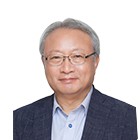
Han Ki-bum
Adjunct Senior Fellow
Dr. Han Ki-bum worked as a North Korea analyst at the National Intelligence Service over 20 years before retiring in February 2009 as the third deputy director (in charge of North Korea affairs). After retiring from the service, he worked as a visiting professor at Korea University and a visiting researcher at the Korea Institute for National Unification, And then served as the first deputy director of the NIS (in charge of North Korea and overseas affairs) again from April 2013 ~ February 2016. Since then, he has been working as a endowed Research Fellow at the Institute for National Unification, then as a endowed Research Fellow at the Institute for North Korean Studies, and as a Visiting Research Fellow at the Asan Institute for Policy Studies from January 2024.
view more
Su Bo Bae
Research Associate
Su Bo Bae is a research associate at the Asan Institute for Policy Studies. She received her B.A. in German Language and Literature from Seoul National University and earned her M.A. in North Korean Studies from Korea University. Before joining the Asan Institute, she worked as a researcher at the Database Center for North Korean Human Rights (NKDB). Her research interests include North Korean human rights, the North Korean political system, and inter-Korean relations.