
Video

Publications
Issue Briefs
Assessment of the First Session
of the 15th Supreme People’s Assembly
of North Korea and Kim Jong Un’s Policy Speech
Han Ki-bum, Su Bo Bae
1,9242026.04.16


North Korea elected 687 deputies to the 15th Supreme People’s Assembly (SPA) on March 15, 2026, the first such election in seven years, for a five-year term, and convened its first session on March 22–23. At the first meeting of the 15th SPA, North Korea discussed agenda items including: the election of the president of the State Affairs Commission; the election of state leadership bodies and sectoral committees of the Supreme People’s Assembly; amendments and supplements to the Socialist Constitution; the thorough implementation of the five-year national economic development plan presented at the 9th Party Congress; and the settlement of the 2025 state budget and the 2026 state budget. Kim Jong Un then delivered a policy speech.
In his policy speech, Kim Jong Un referred only briefly to two “achievements” of the past seven years: the entrenchment of the line of self-reliance and the securing of North Korea’s status as a nuclear weapons state. This appeared to signal that the public would once again be expected to “tighten its belt.”
As tasks for the organs of the regime, in the political and social spheres, he presented “independence, self-sustenance, and self-defense” and the precedence of ideology as the guiding principles of state activity, while also raising the issues of promoting a new police system and establishing moral discipline. In the economic sphere, he identified as the tasks “to which efforts must be directed” the need to increase strained electricity and coal production and to resolve the food problem, described as the most urgent task. In the military sphere, citing the “complex international situation,” he called for strengthening defense capabilities by giving top priority to the provision of human and material resources.
In terms of external relations, he made North Korea’s anti-U.S. hostility even more explicit than at the Party Congress. Regarding South Korea, he formally recognized South Korea as the “most hostile state,” and revealed his determination to pursue a “struggle against the enemy,” thereby further amplifying and reproducing a sense of internal tension.
This article is an English Summary of Asan Issue Brief (2026-12).
(‘북한의 최고인민회의 제15기 제1차 회의 및 김정은 시정연설 평가’)
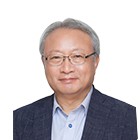
Han Ki-bum
Adjunct Senior Fellow
Dr. Han Ki-bum worked as a North Korea analyst at the National Intelligence Service over 20 years before retiring in February 2009 as the third deputy director (in charge of North Korea affairs). After retiring from the service, he worked as a visiting professor at Korea University and a visiting researcher at the Korea Institute for National Unification, And then served as the first deputy director of the NIS (in charge of North Korea and overseas affairs) again from April 2013 ~ February 2016. Since then, he has been working as a endowed Research Fellow at the Institute for National Unification, then as a endowed Research Fellow at the Institute for North Korean Studies, and as a Visiting Research Fellow at the Asan Institute for Policy Studies from January 2024.
view more
Su Bo Bae
Research Associate
Su Bo Bae is a research associate at the Asan Institute for Policy Studies. She received her B.A. in German Language and Literature from Seoul National University and earned her M.A. in North Korean Studies from Korea University. Before joining the Asan Institute, she worked as a researcher at the Database Center for North Korean Human Rights (NKDB). Her research interests include North Korean human rights, the North Korean political system, and inter-Korean relations.