Video

Publications
Op-ed
[Asan Plenum 2026] Welcoming Remarks
- Expert
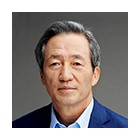
- Chung Mong Joon
- Hit
- 2,781
- Date
- 26-04-08 10:07


Good morning, distinguished guests, dear friends, ladies and gentlemen,
Welcome to the Asan Plenum 2026.
The theme of this year’s Plenum is “Modernizing Alliances.” The United States has around 50 treaty allies around the world today. The U.S.-led alliance system won the Cold War. In Asia, the hub-and-spokes system deterred a second Korean War and laid the conditions for economic development and democratization in South Korea, Japan, the Philippines, and beyond. In Europe, the collective security of NATO won the Cold War against the Soviet Union, reunified Germany, and liberated the Warsaw Pact countries from communism.
South Korea is one of the great alliance success stories. Since 1953, the Korea-U.S. alliance has been the shield that enabled the Miracle of the Han River. Had it not been for the alliance with the United States, South Korea we know today would not have been possible.
Our survival, prosperity, and democracy were built not only on Korean resilience, but also on the sacrifice of American and UN forces who fought for a country they had never heard of. Many of our speakers today come from countries who sent troops and medical support under the UN flag to defend South Korea, including Australia, New Zealand, the Philippines, India, and the United Kingdom. On behalf of the Korean people, I want to express my sincere gratitude to you for your sacrifice.
Ladies and Gentlemen,
Today, as the United States rethinks its place in the world, the U.S.-led alliance system that emerged at the end of the Second World War is undergoing a major change. Over the past decade, the United States started to modernize its alliances in different ways. As an ally, we must continue to bear our share of the burden of collective security. Alliances are not static. They must evolve, or they may erode. They must modernize, or they may weaken.
For South Korea, which the Trump administration calls a “model ally,” the modernization of our alliance will affect our national security and our strategic future. This year’s Asan survey found a record 97% of South Koreans support for the ROK-U.S. alliance. We are playing our part for the system of alliance. This includes increased defense spending, investment of $350 billion in the United States, cooperation for nuclear-powered submarines, and contributing to the development of U.S. shipbuilding.
Why does the United States want to modernize its alliances? Is it to share the burden of collective defense in the face of rising threats? Authoritarian regimes in Northeast Asia are forging new relationships. Russia, China, and North Korea are working more closely in ways that challenge the rules-based order. The United States must carry the indispensable role of anchoring the global alliance system against the axis of revisionist powers.
New threats are also emerging in cyber, space, supply chains, and emerging technologies. These developments require alliances to rethink obligations and expectations. These are important reasons why South Korea supports alliance modernization.
Dear Friends, Ladies and Gentlemen,
There are some concerns about what alliance modernization may mean. Some statements of the second Trump administration suggest that alliance modernization is to shift burdens, risks, and responsibilities.
Many in Korea worry that the United States is no longer fully committed to addressing the nuclear threat from North Korea. The U.S. National Defense Strategy mentioned that South Korea should take “primary” responsibility for dealing with North Korea.
North Korea now presents its nuclear forces as a source of regime legitimacy, calling them the “pinnacle of dignity and self-reliance,” and making clear that it will continue to strengthen its nuclear and missile capabilities. While Pyongyang deepens its alignment with China and Russia, and North Korea possesses a growing and diversified nuclear arsenal, what kind of credible deterrence do we need?
If South Korea is being asked to take the primary responsibility for dealing with the North Korean threat without the support of the U.S. alliance, then this may require bold new thinking for Korean diplomacy. For example, how should South Korea deal with countries, that try to exploit inter-Korean relations to extract benefits from both sides? South Korea should rethink its diplomatic posture toward states that benefit from a relationship with Seoul while legitimizing the North Korean regime.
One proposal that has emerged is the idea of a “Korean version of the Hallstein Doctrine.” During the Cold War, West Germany adopted the Hallstein Doctrine to signal that it would cut diplomatic relations with countries that recognized East Germany as a sovereign state. The purpose was to show that opportunistic diplomacy would carry consequences.
A Korean version of this idea would send a similar message. Those countries which engage in opportunistic political behavior should also be held accountable.
Partnership with South Korea must come with responsibilities. Countries cannot expect access to South Korea’s markets, capital, technology, and security cooperation while at the same time, supporting a regime that threatens us with nuclear weapons.
Dear Friends, Ladies and Gentlemen,
Please allow me to conclude my remarks with some thoughts on what I think a true modernization of the U.S. alliance system could look like. The first suggestion is stronger nuclear sovereignty for allies.
We must also be prepared to discuss options once considered difficult. This includes the redeployment of several dozen U.S. tactical nuclear weapons that the United States withdrew from South Korea in 1991, with the end of the Cold War. The United States still deploys about 100 tactical nuclear weapons in five European countries. Then, why not in South Korea? Nuclear weapons can be deterred only by nuclear weapons.
In Europe, U.S. tactical nuclear weapons have long been forward-deployed under NATO’s nuclear sharing arrangements. They are not symbols of escalation, but tools of reassurance. They are political signals that deterrence is collective and credible. This raises a question: why is such an arrangement considered stabilizing in Europe, but unthinkable in Asia?
The debate must now move beyond whether such options can
be discussed. This can include questions
of command and control, escalation management, and alliance consultation
mechanism.
One possibility that we could consider is a coordinated approach involving both South Korea and Japan. These discussions raise sensitive political questions, especially in Japan. Japan’s Three Non-Nuclear Principles have played an important role in the past. But principles created for a previous environment should not be a barrier in time when environments change.
Even in Japan, there is growing debate about whether all three principles remain equally viable today.
My second suggestion is that stronger collective security cooperation should be the aim of alliance modernization. It is time to rethink the architecture of security in the Indo-Pacific. We need an Asian version of NATO. We may call it the Indo-Pacific Treaty Organization, (IPTO). In our “hub-and-spokes” alliance system, the United States and its treaty allies, South Korea, Japan, Australia, New Zealand, the Philippines, and Thailand should strengthen the “spoke-to-spoke” cooperation. We should also increase cooperation with the important partner like India.
Dear Friends, Ladies, and Gentlemen,
Alliance modernization must account for the reality that the United States is rethinking its approach to the world. Modernization should not be allowed to transform into alliance termination.
We should be careful not to throw the baby out with the bathwater. I hope my calls for nuclear sovereignty through nuclear weapons sharing and redeployment of tactical nuclear weapons, and collective security measures will ensure that the U.S.-led alliance system can be modernized to successfully endure for another 80 years.
During today’s sessions, we will examine alliance modernization across military, economic, and technological dimensions. We will discuss alliances in the Indo-Pacific region as well as those in the Atlantic.
Thank you very much for sharing your insight and wisdom.
* The above speech is the full text of the Welcoming Remarks delivered by Dr. MJ Chung, Honorary Chairman of the Asan Institute for Policy Studies, at the Asan Plenum 2026.