
Video

Publications
Op-ed
[JoongAng Ilbo Op-ed] Joining CPTPP is not a choice but a survival strategy for Korea
- Expert
- Choi Kang
- Hit
- 1,695
- Date
- 26-04-09 09:14


The government’s renewed push to join the Comprehensive and Progressive Agreement for Trans-Pacific Partnership (CPTPP), announced during a Korea–Japan summit, is a timely decision. The CPTPP includes 12 member economies such as Japan, Vietnam, Australia, the United Kingdom and Canada. Previous administrations also expressed interest in joining, but concerns over the potential impact on domestic industries, particularly agriculture and fisheries, prevented progress.
The global environment has since shifted. The Iran war, rising protectionism and a deepening divide between the United States and China have reshaped the international economic order. For Korea, a mid-sized trading nation, survival now depends on diversifying markets and stabilizing supply chains. The CPTPP offers a network well suited to these goals.
The agreement is more than a conventional multilateral free trade pact. It represents a “21st-century trade framework” encompassing supply chain cooperation, digital trade rules and disciplines on state-owned enterprises. Membership alone is expected to enhance trade credibility and integrate Korea into key regional supply chains. The Korea Institute for International Economic Policy estimates that joining the CPTPP would raise Korea’s gross domestic product by around 0.33 to 0.35 percentage points. The Korea Institute for Industrial Economics and Trade projects that the trade balance could improve by more than 1 trillion won annually over the long term.
Beyond economic gains, CPTPP membership carries strategic implications. The pact includes key security partners of the United States, such as Japan, Australia, the United Kingdom and Canada. Entering this rule-based economic bloc would strengthen not only economic security cooperation but also broader strategic alignment. As Korea becomes a central node in CPTPP supply chains, it would be harder for the United States to exclude it from regional frameworks, while Korea could reduce its dependence on China. Such multilateral cooperation could also reinforce the Korea–U.S. alliance and improve Korea’s negotiating leverage.
Concerns remain. Critics point to intensified competition with Japanese manufacturers, increased imports of agricultural and fisheries products and the possibility of short-term trade deficits. The removal of tariffs on Japanese automobiles and projections of declining agricultural output are frequently cited risks. However, these challenges reflect existing gaps in industrial competitiveness rather than the effects of CPTPP itself. Delaying market opening is likely to widen these gaps further. In this sense, the CPTPP could serve as a catalyst for industrial restructuring rather than a source of crisis.
Agriculture has long been viewed as a “casualty of liberalization,” even before the launch of the World Trade Organization in 1995. Yet existing compensation mechanisms can be expanded to mitigate the impact. The variable direct payment system helps absorb shocks by compensating farmers when prices fall below a certain level due to import competition. The public interest direct payment program, introduced in 2020, recognizes agriculture’s role in environmental protection and rural sustainability, providing compensation for these public goods. This reflects a policy shift that treats farming not merely as production but as a contributor to land management and food security.
Additional measures can support structural adjustment. Programs that assist elderly farmers in exiting agriculture can provide stable income while encouraging remaining farms to scale up and adopt smart farming technologies. With such policies in place, CPTPP membership need not signal the abandonment of agriculture. Instead, it can accelerate structural transformation and enhance competitiveness. Expanding the use of domestic agricultural products in public, military and school meal programs is another viable approach.
Joining the CPTPP would also strengthen the institutional foundation for Korea–Japan cooperation. Japan has previously been cautious about Korea’s accession due to historical disputes, but improving bilateral relations have created more favorable conditions. Participation in the CPTPP would institutionalize economic cooperation between the two countries and serve as a foundation for broader Korea–U.S.–Japan collaboration.
The global order is now in transition, marked by conflicts such as the Russia–Ukraine war and the Iran war, as well as intensifying competition between rules and spheres of influence. The United States is using tariffs even against allies, while China is deploying economic power as a geopolitical tool. For Korea, which achieved growth through openness, continued prosperity in an era of protectionism requires engagement with higher standards and broader markets. Joining the CPTPP is therefore not a matter of choice, but a strategic necessity.
* The view expressed herein was published on April 9 in JoongAng Ilbo and does not necessarily reflect the views of The Asan Institute for Policy Studies.
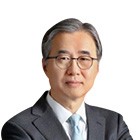
Choi Kang
President
Dr. CHOI Kang is the President at the Asan Institute for Policy Studies. Previously, he was the dean of Planning and Assessment at the Korean National Diplomatic Academy. In 2012, Dr. Choi served as the president at the Institute of Foreign Affairs and National Security (IFANS). He was also a professor and director general for American Studies at IFANS, a research fellow at the Korea Institute for Defense Analyses, and senior director for Policy Planning and Coordination on the National Security Council Secretariat. He holds several advisory board memberships including: the Committee on Foreign Affairs, Trade, and Unification of the National Assembly; Ministry of National Defense; Ministry of Unification; Air Force Development Committee; and the National Unification Advisory Council. Dr. Choi was also a South Korean delegate to the Four-Party Talks. He writes extensively on the ROK-US alliance, North Korean military affairs, inter-Korean relations, crisis management, and multilateral security cooperation. Dr. Choi received his B.A. from Kyunghee University, M.A. from the University of Wisconsin-Madison, and his Ph.D. in political science from Ohio State University.
view more