
Video

Publications
Op-ed
[Munhwa Ilbo Op-ed] Can China Call Itself a G2 Country While Ignoring Iran and North Korea’s Nuclear Threats?
- Expert
- Choi Kang
- Hit
- 1,489
- Date
- 26-04-17 15:42


A second round of U.S.-Iran ceasefire talks is expected to take place over the weekend, yet global logistics are showing severe signs of paralysis as the United States has responded to Iran’s blockade of the Strait of Hormuz with a counter-blockade. Dubai crude oil, which stood at $68.40 per barrel on February 27, before the outbreak of the war, has surged to $106.50 as of the 13th.
The United Nations has been unable to play any meaningful mediating role, and the major powers are likewise turning away from their responsibilities. China, which since 2013 has proposed a “new model of great power relations” and presented itself as a joint steward of the international order as one of the G2 powers, has done little more than rhetorically call for a “cessation of hostilities,” and has made no active effort to help lift the blockade of the Strait of Hormuz or resolve the crisis. This has led to interpretations that China’s passivity is a calculated choice made with the interests of the so-called “CRINK” authoritarian coalition among China, Russia, Iran, and North Korea in mind.
The starting point of this crisis is the suspicion surrounding Iran’s nuclear development. Although Iran is a signatory to the Nuclear Non-Proliferation Treaty (NPT) and a founding member of the International Atomic Energy Agency (IAEA), it has reportedly amassed a large stockpile of highly enriched uranium far exceeding the 3.67 percent enrichment cap permitted under the Joint Comprehensive Plan of Action (JCPOA), agreed in 2015 between Iran and the six major powers—the United States, China, Russia, the United Kingdom, France, and Germany. According to an IAEA report published in May last year, Iran possessed approximately 408 kilograms of uranium enriched to over 60 percent, bringing it close to crossing the threshold for a nuclear weapons capability.
What is required in such a situation is the role of a responsible great power. Yet despite repeated warnings from the IAEA, China has remained passive in efforts to prevent Iran’s nuclear development and, even amid the war, has confined itself to diplomatic rhetoric about “dialogue and de-escalation.”
An even greater problem is that this same attitude has been repeated on the North Korea issue as well. While China has expressed opposition to North Korea’s nuclear and missile development, in practice, it has not only failed to properly enforce sanctions but has, in practice, defended North Korea’s nuclear armament under the logic of its “legitimate security concerns.” As a result, North Korea has become a de facto nuclear weapons state, and the Korean Peninsula has been exposed to a structural nuclear threat. It is also worth noting that more recently, there has also been a notable shift away from “denuclearization” toward an emphasis on “stability” and “dialogue,” with the policy center of gravity moving toward a management-based approach premised on North Korea’s continued possession of nuclear weapons. This is a dangerous change that fundamentally undermines the international non-proliferation regime. If the goal of denuclearization becomes blurred, the actions of states seeking nuclear weapons may become a fait accompli, and the possibility of a “nuclear domino” may grow.
Some have assessed China as a beneficiary of the U.S.-Iran war, but in the long run China, too, cannot remain unaffected. Given its heavy dependence on Middle Eastern crude oil, the Strait of Hormuz is a vital passage for China, and instability in maritime shipping and protracted high oil prices would place a direct burden on the Chinese economy. A contraction in maritime logistics and a decline in global trade would likewise inevitably deal a blow to China’s economy. Any short-term gains are highly likely to turn into long-term structural risks.
The dual challenges of North Korea and Iran are a litmus test for China’s sense of responsibility. G2 status is not something that can be claimed by declaration alone; it must be proven through action. South Korea, too, must take a clear position. It should make it unmistakably clear that China’s evasion of responsibility for North Korea’s denuclearization can no longer be tolerated, and, regarding the U.S.-Iran war, it should also stress that ensuring safe navigation through the Strait of Hormuz is essential to the stability of the international economic order.
* The view expressed herein was published on April 15 in Munhwa Ilbo and does not necessarily reflect the views of The Asan Institute for Policy Studies.
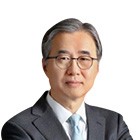
Choi Kang
President
Dr. CHOI Kang is the President at the Asan Institute for Policy Studies. Previously, he was the dean of Planning and Assessment at the Korean National Diplomatic Academy. In 2012, Dr. Choi served as the president at the Institute of Foreign Affairs and National Security (IFANS). He was also a professor and director general for American Studies at IFANS, a research fellow at the Korea Institute for Defense Analyses, and senior director for Policy Planning and Coordination on the National Security Council Secretariat. He holds several advisory board memberships including: the Committee on Foreign Affairs, Trade, and Unification of the National Assembly; Ministry of National Defense; Ministry of Unification; Air Force Development Committee; and the National Unification Advisory Council. Dr. Choi was also a South Korean delegate to the Four-Party Talks. He writes extensively on the ROK-US alliance, North Korean military affairs, inter-Korean relations, crisis management, and multilateral security cooperation. Dr. Choi received his B.A. from Kyunghee University, M.A. from the University of Wisconsin-Madison, and his Ph.D. in political science from Ohio State University.
view more